English
 Japanese

Half of the participants were from a company that wasn't using AI in its operations, and they achieved a reduction of 864 hours of work equivalent to one year in just six months. This is the challenge of a long-established package software company with over 110 years of history.
Topwell Co., Ltd.


Issues before implementation
- Scope of AI application: At the start, each participant was using AI for an average of 0.91 tasks. Of the 11 participants, 6 had not yet used AI in any of their work.
- Frequency of AI interaction: On average, AI was used 1.82 days per week. Four people used AI 0 days per week, indicating that the habit of opening AI as part of daily work had not yet taken root.
- Time management: Sales staff spent most of their time on quotes and email replies, and tasks were handled in a highly individualized, person-dependent manner. The time saved by AI, even when combined across all participants, amounted to only 264 hours per year.
Effects after implementation
- Scope of AI-driven tasks: Average of 0.91 tasks per person → 3.45 tasks (approximately 3.8 times). Everyone now uses AI for at least one task, and its applications have expanded to include emails, proposals, flyers, meeting minutes, and research.
- Frequency of AI use: 1.82 days/week → 4.09 days/week (an increase of approximately 1251 TP3T). Six out of eleven people now use AI 5 days a week, almost every business day.
- Time management: The total time saved by all participants increased from 264 hours per year to 864 hours per year (approximately 3.3 times). As of the fourth session, a reduction equivalent to 864 hours of work per year had been achieved.
table of contents
Topwell Co., Ltd. implemented the "Corporate Reskilling" AI education program over approximately six months for 11 participants in sales, accounting, design, and administration. Through four workshops, the average number of tasks utilizing AI per person increased from 0.91 to 3.45, a 3.8-fold increase, and the total time saved by all participants amounted to approximately 864 hours per year.
More than half of the participants went from not using AI in their work to opening AI programs and using them to perform their tasks almost every day. We will introduce how a long-established company specializing in packages and tools with over 100 years of history expanded its use of AI in just six months.
Company Introduction

Topwell Co., Ltd., founded in 1912 (Meiji 45), is a company headquartered in Taito-ku, Tokyo, with a branch office in Osaka. Its Packaging Division plans and manufactures packaging for various industries, including jewelry, confectionery, and cosmetics. Its Tools Division handles a wide variety of tools, including those for watches, jewelry, precision instruments, and DIY.
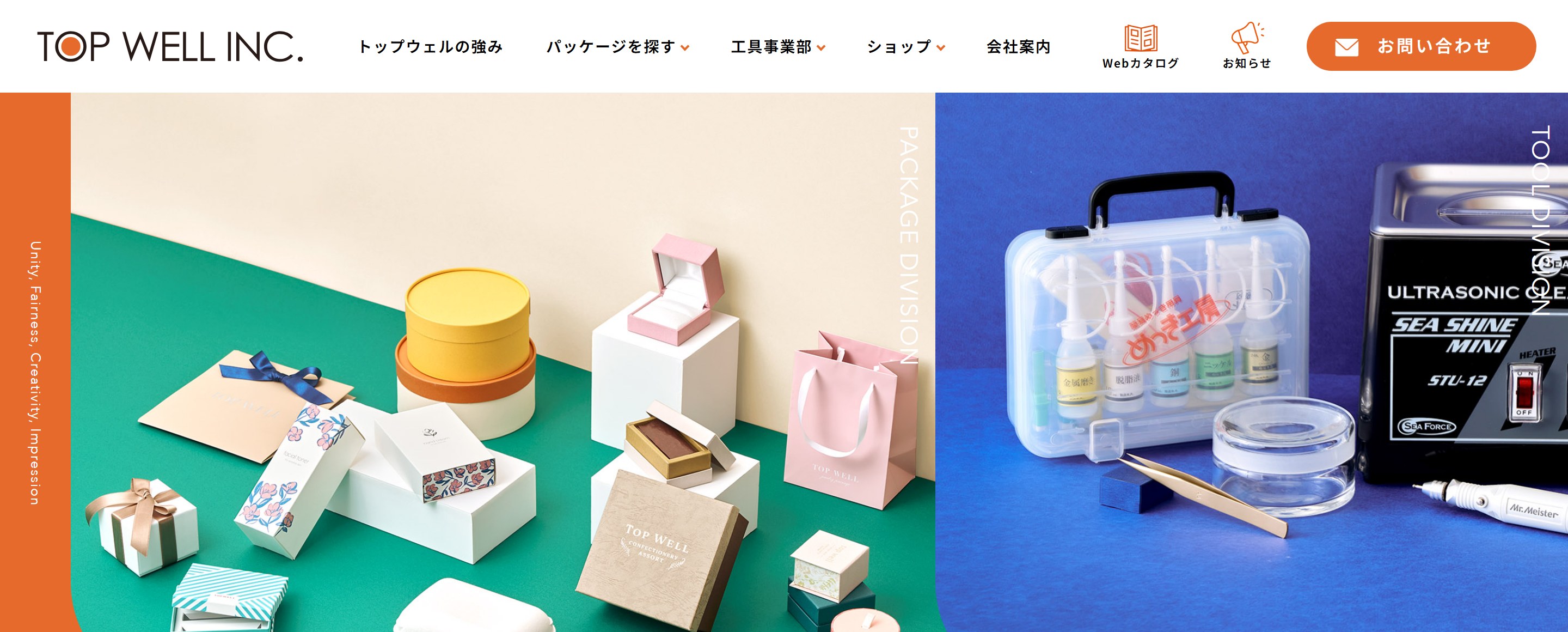
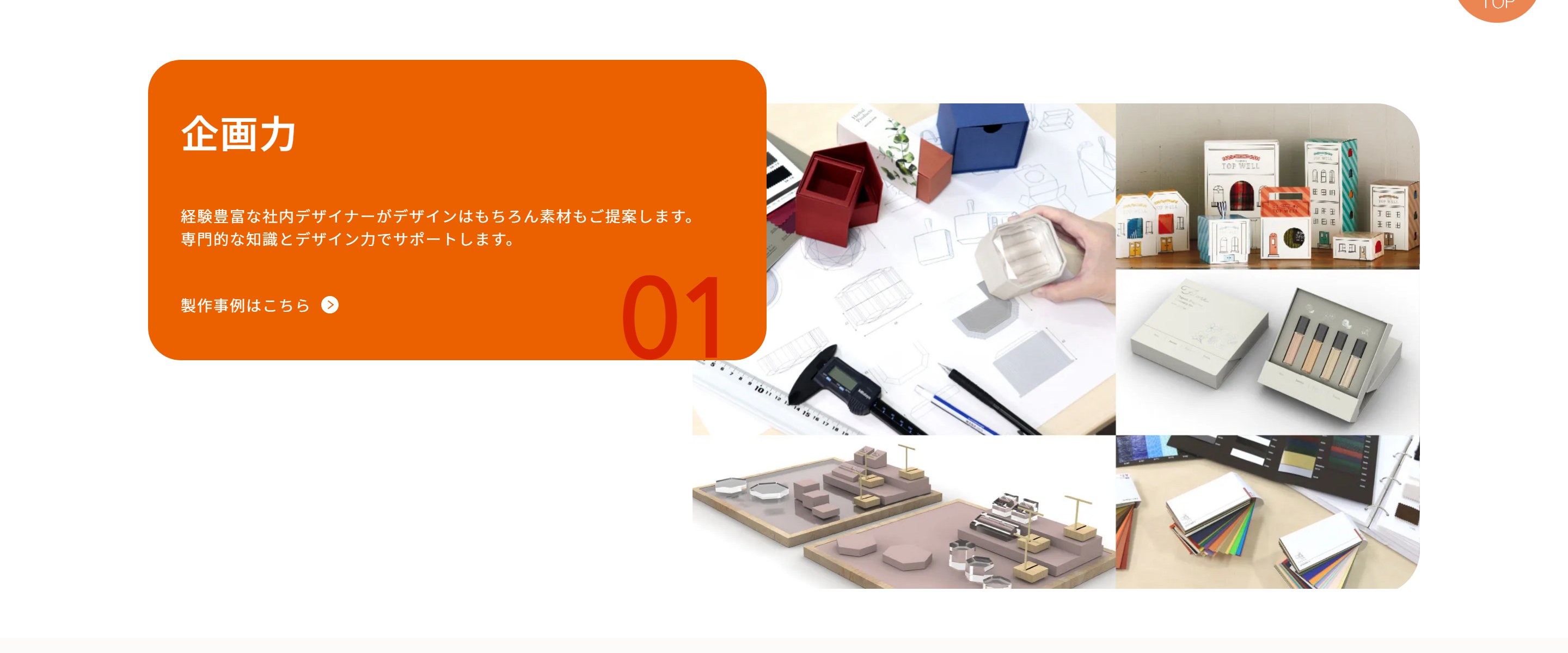
In our packaging business, we offer planning and material proposals by our in-house designers,Over 300 partner factories in Japan and overseasOur strength lies in proposing manufacturing methods that leverage these strengths, and we create packaging designs based on a general idea of "this is the product we want to put in it." The number of cases sold is...Over 3 million pieces per yearI'm going up.
The Tools Division operates under the motto "Supporting Manufacturing," providing a comprehensive product lineup and meticulous support to various manufacturing sites.

The principles we uphold are"Unity, Fairness, Creativity, Impression"(Coexistence, Justice, Creativity, Inspiration). This commitment to pursuing creative work and inspiring practices is also reflected in how we are proceeding with the use of generative AI in this project.
Issues before introducing generative AI
As the company primarily focuses on custom-made products, specifications, quantities, and delivery dates vary for each project. An inventory of tasks conducted as part of the program revealed that sales staff's time was heavily skewed towards "quoting" and "replying to emails."
The quotation process, from requesting quotes from suppliers to creating our own quotations, took approximately 6,700 minutes per week for the entire sales department. Responding to emails from customers and suppliers also took about 2,300 minutes per week. The process of transcribing supplier responses into our company's format and calculating the selling price based on markups relied on individual methods.
On the other hand, the use of AI was still in its early stages. At the time of the first workshop, the figures showed that the average number of tasks using AI was 0.91, and the average frequency of AI use was 1.82 days per week. The amount of time saved by AI, even when combined for all participants, was 264 hours per year. Of the 11 participants, 6 had not yet used AI in their work, and 4 did not open AI even once a week.
"I hadn't really used Gemini much before, so it was a learning experience."
From participant surveys
Although I had AI as a tool, I was still in the stage of not yet integrating it into my daily work. This was the starting point for the past six months.
Implementation Details - Topwell's Unique Initiatives
The six-month program was designed with a two-pronged approach: learning to ensure everyone is on the same foundation, and practical application support tailored to the company's actual work.
- Video-based learning + Gemini x Google Workspace workshop (4 sessions total)
The course was structured around Gemini, aligning with the user's usual work environment, Google Workspace. It progressed gradually over four sessions, starting with the basics of prompts and file utilization, then moving on to creating chatbots (Gems) and integrating with spreadsheets, documents, and slides. All participants completed the video lessons. - Standardize the quotation and proposal process.
In the first session of the utilization support meeting, we focused on the estimation and proposal process, which was the most time-consuming part of inventory management. We used Gemini to reference the material master and estimation rules, and generated estimate requests for partner factories and proposal emails for customers from project memos. We also conducted a workshop where the system checked estimates and purchase orders against a set of criteria to determine whether they were "OK/incomplete/need to be checked." We used AI not only for generation but also for "verification," while still confirming the numbers with the original documents. We shared this distinction from the very beginning. - "Reply Assistant Gem" with packaging industry terminology
The goal of the second session was for each participant to take home tools they could use the following day. They each created their own custom Gem, which incorporated their company's rules, past reply examples, and tone guides. This allowed them to create draft replies that incorporated industry terminology such as rigid boxes, foil stamping, lot sizes, and staggered deliveries, simply by attaching the inquiry form. - From individual use to "systems"
In the third session, we demonstrated how to create a no-code system that automatically checks project sheets every morning and sends emails to assigned personnel about incomplete projects with approaching deadlines. We divided tasks such as project management and expense reimbursement into those we could set up ourselves and those we would leave to development, and organized how to proceed with systematization.
Benefits of using generative AI
The biggest change has been the range of tasks using AI. At the start, the average number of tasks using AI per person was 0.91, but by the fourth session, it had increased to 3.45. The uses expanded to include creating and replying to emails, proposals, company brochures, product flyers, meeting minutes, market research, and image creation, all tailored to the individual job roles of the participants.
Changes in key KPIs (from the 1st to the 4th edition)
| index | change | stretch |
|---|---|---|
| Number of jobs using AI | 0.91 items → 3.45 items | Approximately 279% increase |
| AI usage frequency | 1.82 days per week → 4.09 days per week | Approximately 125% increase |
| Time saved (overall/annualized) | 264 hours → 864 hours | Approximately 227% increase |
By the fourth session, there were no participants who did not use AI in their work. Six out of eleven participants used AI five days a week. This indicates that the use of AI has taken root throughout the entire organization, rather than being limited to just a few individuals.
The total time saved for all participants is calculated on an annual basis.From 264 hours to the equivalent of 864 hours, approximately 3.3 times longer.This represents an increase of approximately 72 hours of work per month, which has been reduced by AI.
* The figures are based on participant surveys (self-reported) conducted after the 1st and 4th workshops. The number of tasks using AI and the frequency of use are the average of 11 respondents, and the time saved is calculated by multiplying the sum of the 11 respondents' "time saved per week" by 4 to get a monthly equivalent, and then multiplying that by 12 to get an annual equivalent. The results will change if the assumptions change.
Looking at the flow of events over the course of a day, the changes are as follows:
Before implementation | A day of writing from scratch and searching from scratch
- Responding to emails from customers and suppliers. Considering the wording carefully.From scratchwrite
- I create proposal documents and flyers. This includes both the structure and the text.From a blank page
- After the sales meeting, I took the meeting minutes.With your handsSummarize
- Market and trading partner information, search resultsone by oneRead and collect
After implementation | Draft is done by AI, final touches by a human (1 day)
- Email is handled by a Gem with custom rules.draftPrint the number, check the recipient's name and send it.
- Proposal documents and flyers will be handled by AI.DraftTake it out, and then finish it by hand.
- The minutes will be taken by AI.Summarize the key pointsThen, check and share.
- Research will be handled by AI.Let's summarizeTake time to verify the facts.
In the spreadsheet workshop, the experience of replacing tasks that previously involved using functions and pivot tables with instructions for AI resonated with the participants and contributed to their satisfaction.
"I found it efficient that pivot tables and similar tools could be created using the same workflow as Excel, but with the ability to give verbal instructions."
From participant surveys
The ability to translate operations into "words" without changing the usual procedures lowered the barrier to using AI in daily work. Some users have also expressed realization of just how much faster processes that were previously done manually can be with AI.
"I used to do things like graphing and highlighting manually, so I felt it was 'faster'."
From participant surveys
Having gained experience creating Gems, some participants have begun to explore new ways to use them on their own.
"Setting up interactive prompts in gems is surprisingly easy, and I'd like to try using it for things other than email."
From participant surveys
We've moved from simply following instructions to considering where to integrate AI into our own work. In the sales department, we've even started developing a system to share data on successful products via a web browser.
Future outlook
Now that its use has begun to take root within the organization, Topwell's next challenge is to expand the participants' initiatives into internal company systems.
- Consideration of business process automation
Based on the tasks identified in the utilization support meeting, we will proceed with concrete discussions on automating those tasks using tools such as GAS (Google Apps Script). - We are working to streamline the sales department's processes.
We will solidify initiatives that started in the sales department, such as sharing performance data, and elevate individual efforts to the team standard. - Deployment to back office
The next challenge is to ensure that the AI-generating system is adopted by administrative departments and other areas that did not participate in this program. We will consider internal systems and support structures to ensure that members who are accustomed to long-standing methods can transition smoothly. We plan to move into the next phase of internal deployment once the busy season is over. - Further increase the amount of time saved
The number and frequency of applications have reached the highest level. Next, we will further reduce the time spent on each task and allocate the saved time to higher value-added work.
Through a six-month initiative, Topwell has progressed from simply "trying out" the generation AI to "using it in daily operations." The average of 3.45 tasks per person and the resulting reduction of 864 hours of work per year are some of the achievements that have emerged during this process.
Founded as a watchmaking tools business, and expanding into packaging, the company has consistently brought customers' ideas of "what we want to put inside" to life. With "Creativity" as its motto, the company will use the time freed up by utilizing generative AI to fuel its next creative endeavors.